| |
| The Pyramid at Caraburo today https://media.sciencephoto.com/image/t8350543/800wm |
Monday, 21 October 2019
The Pyramids of Yaruqui
Monday, 14 October 2019
French scientists at the Equator, 1735
https://www.bbc.co.uk/programmes/b0074t5l
Last week BBC4 repeated a documentary on the French geodesic mission of 1735, one of the Voyages of Discovery series introduced by explorer and broadcaster Paul Rose. It was originally broadcast in 2006. Having missed it the first time round, I was pleased to catch the repeat. The production was marred by some truly dreadful dramatic reconstructions which made La Condamine and his colleagues look like caricatures out of Horrible Histories. However, the filming on location in Peru was stunning. The historical consultant for the programme was the American naval historian Larrie Ferreiro, who has since written a well-regarded full-scale study of the expedition.(Measure of the Earth, published 2011)
I found it difficult in places to piece together events from the information given, so here is a summary of the main points of the narrative, plus a few supplementary "viewing notes".
Saturday, 5 October 2019
Hidden treasures of the Musée Lambinet
Here are a few 18th-century highlights from the exhibition, "Hidden treasures of the Musée Lambinet", currently on show in the "Espace Richaud" in Versailles. The venue is the chapel of the former hôpital royal, which has been completely renovated and was opened as an exhibition space in 2015. As the Lambinet's director Emilie Maisonneuve explains, the idea of the exhibition is to showcase fifty or so carefully selected objects from the collections. The grandiose setting, with its magnificent cupola, gives an opportunity to display decorative pieces which are easy to overlook in the confines of the museum. Also included are a number of items of particular historical interest, some of which are too fragile to be on permanent view. There doesn't seem to be any online listing, but many of the exhibits can be identified in the photos and videos.
Centrepiece - A Harp

Harp, constructed between 1787 and 1799, by Jean-Henri Naderman (Fribourg 1735-Paris 1799). Sculpted and gilded wood. Inv. 1076 - Legs Couderc.
Chosen for the central focal point of the exhibition, this sculpted harp made by Jean-Henri Naderman, gilded and decorated with vernis Martin and featuring the head of a ram. Naderman settled in Paris in 1762 or 1763 and in 1778 became official instrument maker to Marie-Antoinette. He built instruments for Madame Victoire and the comte de Polignac. A few other similar harps survive - in the Louvre and at Versailles - but this is one of the finest examples.


Here is the harp on display in the Salon doré of the museum:

Furniture

Two chairs from a set comprising six chairs, a chimney screen and an ottomon, bearing the stamp of Jean-Baptiste Sené (1748-1803). Sené was the principal supplier to the Garde-Meuble from 1785, but he also worked for private clients. Gift of Paul-Louis Weiller in 1978.


Above: Writing desk of about 1770, made by Pierre Roussel (1723-1782). Inv. 90.6.1.
Below: Commode of about 1764 with top of Languedoc marble, bearing the mark of François Reizell, master in 1764. Inv. 90.6.2. Both items gifts of Monsieur Vaccaro, 1990.

Commode by Mathieu Criaerd (1689-1776) This piece was delivered to the Palace of Versailles in 1752 for the apartments of Madame Infante, duchess of Parma (the eldest daughter of Louis XV). Inv. 90.7.1 - Gift of baron Edmond de Rothschild in 1988.
More pictures and details are posted on ConnaissancesdeVersailles:
http://www.connaissancesdeversailles.org/t8861-exposition-tresors-caches-du-musee-lambinet
http://www.connaissancesdeversailles.org/t8861-exposition-tresors-caches-du-musee-lambinet
The items of furniture have been chosen to illustrate the museum's continuing importance as a "maison de collectionneurs" in receipt of items from significant donations from private collections.
Clocks

Late 18th-century cartel clock, with movement by Jean-Noël Bigand (d. 1741); vernis Martin and gilded bronze [Inv. 311] and(right) a fine Meisen clock. I couldn't find details for the gilded monster in all the videos. The notice beside it, gives the maker as André Hessen and the date as "after 1775".

Late 18th-century cartel clock, with movement by Jean-Noël Bigand (d. 1741); vernis Martin and gilded bronze [Inv. 311] and(right) a fine Meisen clock. I couldn't find details for the gilded monster in all the videos. The notice beside it, gives the maker as André Hessen and the date as "after 1775".


There are a trio of portrait busts on display. The central one is the Lambinet's copy of Pajou's Louis XVI; I am not sure about the other two.
Paintings


Jacques de Lajoue (1686-1761) Architectural fantasy showing a terrace or marble pavilion at the end of a canal, c.1736. Inv. 85.7.1.
Notice on Joconde:
https://www.pop.culture.gouv.fr/notice/joconde/04000001235

Nicolas Bertin (1668-1736) Moses and the daughters of Jethro, 1704. Inv. 83.9.1 .
Notice on Joconde
https://www.pop.culture.gouv.fr/notice/joconde/04000000042
Other pieces of historical interest

Fan, painted paper on ivory frame, showing a view of the Palace of Versailles.c. 1750. Inv. 95.15.1.

Original sketch of Charlotte Corday by Jean-Jacques Hauer (1751-1829). Part of the Collection Charles Vatel. Hauer was authorised to make Corday's portrait during the trial, and was invited to complete it in her prison cell. The work is very fragile and not normally on display.
Here is Stéphane Bern on Corday at the Lambinet:
https://youtu.be/eFATFnbMahg

Painting on a plate by Hubert Robert, during his imprisonment in saint-Lazare, showing a gaoler inscribing the names of prisoners entering the prison. Inv. 754
On Joconde:
https://www.pop.culture.gouv.fr/notice/joconde/04000001851

Miniature on ivory of Alexandrine Jeanne Le Normant d'Etiolles, the daughter of Madame de Pompadour who died aged nine. After a painting of 1749 by Boucher, recently acquired by the Palace of Versailles.
See Société des Amis de Versailles
https://www.amisdeversailles.com/objet_detail.php?id_objet=370&fbclid=IwAR23HlYgwPId8B7MkagtBWxnQSX0NrMo7fiwsN2vWsHf7HFhZ7NvIDx7dtA
References
Press notice for the exhibition:
 .https://www.versailles.fr/fileadmin/user_upload/Versailles-fr/Culture/Etablissements_culturels/Mus%C3%A9e_Lambinet/Expositions/CP-Tresors_caches_ML.pdf
TV78 - La chaîne des Yvelines: Interview with the director of the Lambinet Emilie Maisonneuve.
https://www.youtube.com/watch?v=2FGqVp3AvtM
"Exposition Trésors cachés du Musée Lambinet", Perfumeuse.canalblog post of 22.10.2019
http://parfumeuse.canalblog.com/archives/2019/10/22/37731908.html
See also: Musée Lambinet, Suivez-nous au XVIIIe siècle [Museum guide]
https://docplayer.fr/10884827-Suivez-nous-au-xviiie-siecle-bonne-visite.html
Note, February 2020
https://webmuseo.com/ws/musee-lambinet/app/collection/expo/7
This month the Lambinet launched its new "virtual" collections webpages. The initial 63 items were all included in the "Hidden Treasures" exhibition, and there is also now a link to the full Journal de l'Exposition. Having struggled to research this post, I can't be bothered to add in all the information that I've missed. However, if anyone is interested in checking details for particular exhibits, selected online entries and the fill pdf catalogue are now available at the above link!
Sunday, 29 September 2019
1750: The last homosexuals executed in France

On 18th October 2014, the Socialist Mayor of Paris Anne Hidalgo ceremonially unveiled a memorial plaque to Bruno Lenoir and Jean Diot, the last men to be executed in France for homosexuality. The plaque is embedded into the pavement at the corner of rue Montorgueil and rue Bauchaumont, on the exact spot where the two were arrested over two hundred and fifty years ago, in January 1750.
Hommage à MM. LENOIR & DIOT from ALSG on Vimeo.
The commemoration is something of a political hot potato. The memorial was the initiative of the Communist and Left Party of the Conseil de Paris (groupe PCF-PG) and is seen as a piece of anti-clerical propaganda (see the articles by Olivier Marchal). It has already been subject to two acts of vandalism in 2018 - a wreath burned in May, the plaque smeared in soot and covered with homophobic tracts in July.
Saturday, 28 September 2019
The Sorcerers of Lyon
The affair of the "sorcerers of Lyon" was a further, far more extensive, trial involving magic quests for treasure. Proceedings took place over a three-year period, from 1742 to 1745, and involved the arraignment of no less than twenty-nine individuals.
This episode is fascinating, not only for the insights into legal practices and attitudes to witchcraft but also for the details of the lives and hopes of ordinary people that it revealed.
The trial is unusually well-documented: the library of the Château Grosbois-en-Montagne in Bourgogne preserves a comprehensive manuscript dossier, including full transcripts of the many interrogation. This compilation was the work of the commissioning magistrate for the case Jean-Claude Perreney de Vellemont (1718-1810), conseiller, and later Procureur-général in the Parlement of Dijon. According to family tradition Perreney was an austere and conscientious man, who got up at four in the morning to attend early mass and habitually spent his days in study. This is borne out by the manuscript, which amounts to 400 folio pages, laboriously transcribed in small neat handwriting.
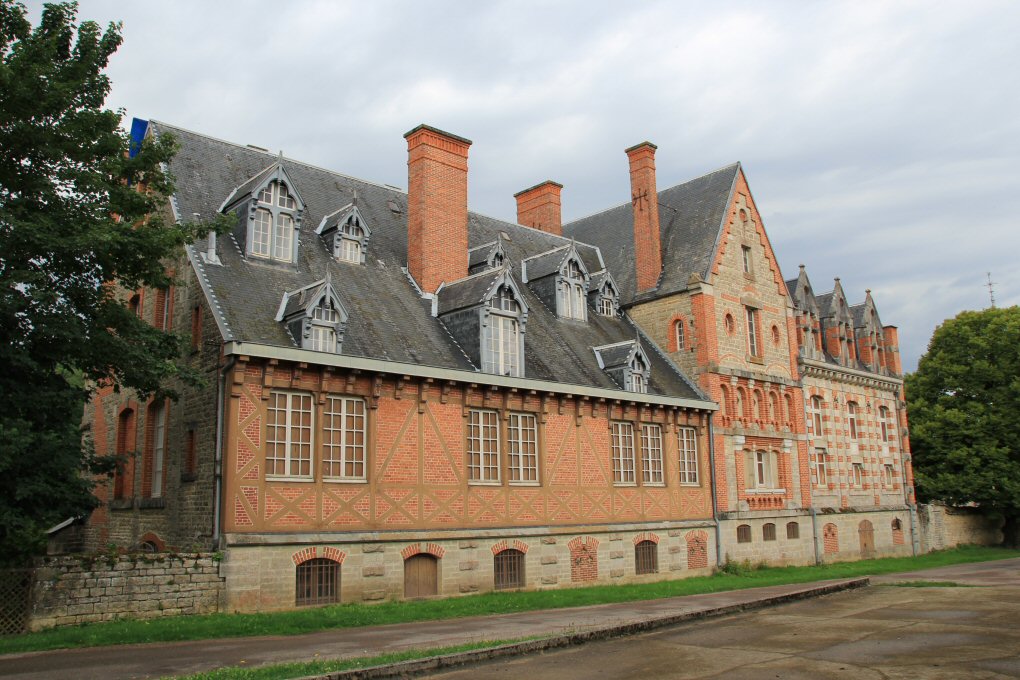 |
| The fortified manor house of Grosbois en Montagne, much embellished by the Perreney family in the 18th century. http://www.chateau-fort-manoir-chateau.eu/chateaux-cote-or-chateau-a-grobois-chateau-de-grobois.html |
Friday, 27 September 2019
Some treasure-seekers

Wednesday, 25 September 2019
The Extravagant Imaginings of Monsieur Oufle
Nothing is so easy as to persuade the Credulous into a belief of whatever one pleases; especially when what is propos'd to them falls in with their Prejudices.
(Bordelon, A History of ..M. Oufle, p.195)

By the opening decades of the eighteenth century, belief in magic and the supernatural was already becoming an object of ridicule. The landmark text is the splendid Histoire des Imaginations Extravagantes de Monsieur Oufle, a comic novel by the abbé Laurent Bordelon published in 1710.
(Bordelon, A History of ..M. Oufle, p.195)

Sunday, 22 September 2019
Some books of magic
According to the historian of the grimoire, Owen Davies, books of magic spells and incantations circulated widely in 18th-century France. Police reports from the opening years of the century reveal a lively trade in manuscripts and clandestine texts among enterprising Parisians, most of them humble members of society: priests, prostitutes, abortionists, chemists, labourers and tradesmen.(Davies p.96)
France rapidly became the European centre for the production of popular books of magic. In the course of the late 18th and 19th centuries, tens of thousands of illegal cheap editions, part of the so-called Bibliothèque bleue, were distributed throughout the country by colporteurs. The centres of production were in Troyes, Rouen and Paris, places of high literacy where standard French was spoken. (Davies, p.98) The earliest title, the Grand Albert was mainly a compendium of "natural magic", but true grimoires, which included methods for the invocation of demons and spirits, became increasingly available - no doubt in response to a growing demand.
As Owen Davies notes, exact bibliographic details are not easy to trace. It is often not clear in the police reports, which works are being described, or whether they are manuscripts or printed texts. The books in question were in any case usually destroyed. Paradoxically, the cheap ephemeral editions of the Bibliothèque bleue are now quite rare. Even when they do survive, origins remain uncertain, since publishers commonly gave false dates and hid behind fanciful imprints - such as Beringos Fratres of Lyon, whose premises were located "at the sign of Agrippa".
Le Grand Albert
The Grand Albert, the oldest magical staple of the bibliothèque bleue, was a heterogeneous compilation of herbalism, household hints and popular superstition. Principally, it gave instructions for the esoteric use of natural materials - to change the properties of inert or living things; or for divination. The contents covered such subjects as gynaecology, physiognomy, alchemy, medicine, and from 1703 it included an almanac of propitious days.
Although the Grand Albert did not contain spells, curses or incantations, its proliferation still generated concern; in 1709 it was listed by censors as a book to be condemned and confiscated, along with a whole range of religious and pseudo-religious works printed in Rouen. (See Davies, p.98)

The "classic" French version, which includes Les secrets des Femmes, appeared for the first time at the beginning of the 18th century under the title Les Admirables Secrets d’Albert Le Grand. The first edition, of which Bibliothèque nationale possesses a copy, dates from 1703 and is a high quality publication, with five fine engravings. Almost certainly it originated outside France.
There were many subsequent editions, following this same basic format. The earliest examples have the imprint "Cologne chez le dispensateur de secrets" and the later ones "Lyon Beringos Fratres". As time passed, the quality tended to decline - for instance the use of contrasting red type was dropped.
Friday, 20 September 2019
Magic in the early 18th century
Edict of 1682
Édit... pour la punition de différents crimes [magie, sortilèges, empoisonnement]. Registré en Parlement le 31 aoust 1682
https://gallica.bnf.fr/ark:/12148/btv1b8607061d/f1.image
In the late 17th and early 18th centuries longstanding laws on witchcraft were repealed the throughout Europe. In France a new framework was provided by the Edict of 1682, which redefined crimes relating to magic in the wake of the "Affair of the Poisons" and a series of high-profile miscarriages of justice by the provincial parlements. The Edict in effect placed the supernatural outside the jurisdictionof the secular law courts. Witchcraft and magic practices were no longer punishable directly, but only in so far as they involved imposture or criminal activity. Severe penalties were retained for blasphemy and poisoning.
 The Edict identified three different sorts of offences:
1. Divination
All persons who practice divination or claim to be diviners were to be summarily banished from the Kingdom as soon as the Edict was published, on pain of corporal punishment.
2. "Superstitious practices"
These were defined as abuse of the the words of Holy Scripture or the prayers of the Church; , also recourse to deeds and words "which have no relation to natural causes". Punishment was left to the discretion of the judge but must be "exemplary".
3. "Impiety and sacrilege"
Those who added "impiety and sacrilege" to superstition in the practice of "supposed magic" were liable to the death penalty. This included attempts to invoke or make pacts with demons, and the misuse of Catholic ceremonial, sacred vessels and sacraments.
All those involved in poisoning or trading in poisons also faced execution.
Édit... pour la punition de différents crimes [magie, sortilèges, empoisonnement]. Registré en Parlement le 31 aoust 1682
https://gallica.bnf.fr/ark:/12148/btv1b8607061d/f1.image
In the late 17th and early 18th centuries longstanding laws on witchcraft were repealed the throughout Europe. In France a new framework was provided by the Edict of 1682, which redefined crimes relating to magic in the wake of the "Affair of the Poisons" and a series of high-profile miscarriages of justice by the provincial parlements. The Edict in effect placed the supernatural outside the jurisdictionof the secular law courts. Witchcraft and magic practices were no longer punishable directly, but only in so far as they involved imposture or criminal activity. Severe penalties were retained for blasphemy and poisoning.

1. Divination
All persons who practice divination or claim to be diviners were to be summarily banished from the Kingdom as soon as the Edict was published, on pain of corporal punishment.
2. "Superstitious practices"
These were defined as abuse of the the words of Holy Scripture or the prayers of the Church; , also recourse to deeds and words "which have no relation to natural causes". Punishment was left to the discretion of the judge but must be "exemplary".
3. "Impiety and sacrilege"
Those who added "impiety and sacrilege" to superstition in the practice of "supposed magic" were liable to the death penalty. This included attempts to invoke or make pacts with demons, and the misuse of Catholic ceremonial, sacred vessels and sacraments.
All those involved in poisoning or trading in poisons also faced execution.
Wednesday, 18 September 2019
Derues and the ritual of execution
 |
| Derues is subjected to extraordinary torture before his execution https://gallica.bnf.fr/ark:/12148/btv1b8410035j/f32.item |
Subscribe to:
Posts (Atom)